The Camera Got Lighter. The Responsibility Got Heavier
Conflict-zone camerawork from the 1990s to the age of live feeds, drones and artificial intelligence
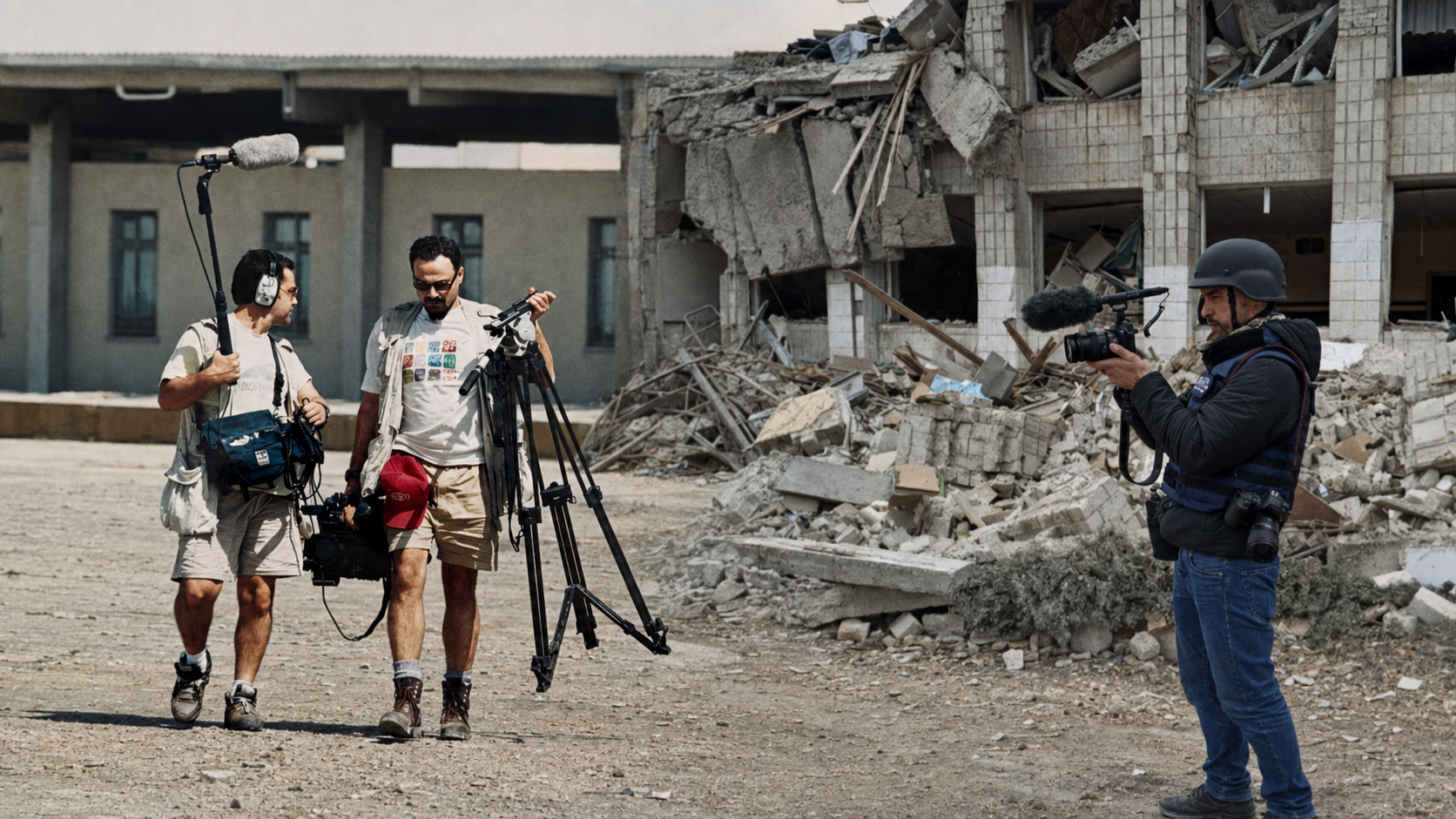
I have been working in television news since 1992. Over the years, I have carried a camera through Sarajevo and Bosnia, Northern Iraq, Gaza, Lebanon, Ukraine and incidents along the Green Line in Cyprus. I have covered wars, political crises, natural disasters and many of those moments when ordinary life suddenly disappears and history takes over.
When you have spent that long in the field, you inevitably compare the way we worked in the 1990s and 2000s with the way conflict news is covered today.
The obvious difference is technology. The cameras are lighter, the pictures are sharper and transmission is almost instant. But this does not mean the job has become easier. In many ways, the physical equipment has become lighter while the responsibility carried by the cameraman has become heavier.
When the Camera Was Heavy
In the 1990s, going into a conflict zone meant travelling with a serious amount of equipment. The camera on your shoulder was only the beginning. There were batteries, tapes, chargers, cables and everything required to keep the camera alive in a place where electricity, transport and communication could disappear at any moment.
You could not shoot endlessly. Tape was limited and batteries were precious. You learned to watch before pressing the record button. You tried to understand where an event was moving and positioned yourself accordingly.
That discipline became part of your instinct.
A cameraman was not simply someone who pointed a machine at an explosion. You had to read the street, the soldiers, the civilians and the silence between two bursts of gunfire. You had to notice when people suddenly left a corner, when a checkpoint became tense or when an apparently safe road no longer felt safe.
Sometimes the most important warning was not something you saw through the viewfinder. It was something you noticed beside it.
Getting the pictures was only half the job. The material then had to be sent. There was no assumption that an image filmed a few minutes earlier would immediately appear on television. A tape might have to travel to a bureau, an airport or a satellite transmission point. Communication with the desk could be difficult, and the newsroom sometimes had to wait without knowing exactly what we had filmed—or whether we were safe.
That delay was a technical limitation, but it also gave journalism something we often lack today: time to think.
The 2000s: The Beginning of Permanent Urgency
During the 2000s, digital cameras, satellite phones, portable editing systems and improved transmission methods changed our rhythm. Newsrooms began expecting pictures sooner. The space between filming an event and broadcasting it became shorter.
This was progress. Faster transmission meant the world could see what was happening while it still mattered. But it also created a new expectation: if technology made speed possible, speed soon became compulsory.
The question from the desk was no longer only, “What is happening?” It was also, “How soon can you send it?”
That was the beginning of the permanent urgency that defines television and online news today.
Today, the Deadline Travels With You
A modern crew can carry equipment that would have seemed impossible to us in the 1990s. A small camera or even a telephone can produce broadcast-quality images. A laptop can become an editing room. A compact transmission unit can send live pictures from a vehicle or a street corner. Satellite images, GPS, encrypted messaging and digital maps can help crews plan routes and verify locations.
All of this is useful. None of it is innocent.
Every connected device can also reveal your position. Every live signal can become a security risk. A social-media post can expose a crew, a military location or the civilians standing nearby. Drones can reach places that once provided cover. Digital surveillance can identify journalists, their contacts and their movements.
In the past, the word “PRESS” was meant to make us visible so that we might be protected. In some of today’s conflicts, being identified as press may offer no protection at all. It may even increase the danger.
The figures are grim. The Committee to Protect Journalists recorded 129 journalists and media workers killed in 2025—the highest annual number since it began keeping records. Of those, 104 were killed in conflict settings. CPJ has also documented a sharp increase in journalists killed in drone strikes.
So yes, the camera is lighter. But the battlefield can now see you more clearly.
From Finding the Picture to Proving It
When I began, our main problem was reaching the story. If something happened, a professional crew had to get there, film it and find a way to send the pictures.
Today, the pictures often arrive before the journalist.
Videos appear on Telegram, X, Instagram, military channels and anonymous accounts within seconds. Civilians record air strikes, destroyed buildings and troop movements on their phones. There are more images from conflict zones than ever before.
But more images do not automatically mean more truth.
A genuine video can be given a false location or date. Old footage can be presented as a new attack. A clip can begin five seconds too late and end five seconds too early. Pictures can be staged, edited or released as part of a military information operation. Artificial intelligence has added another problem: images and voices can now be manufactured with increasing realism.
In the past, the question was: “Did we get the shot?”
Today, we must also ask: “Can we prove what this shot shows?”
Verification has become part of camerawork. Location, light, weather, architecture, road signs, shadows, sound and the direction of an impact can all matter. A professional image is no longer valuable only because it is dramatic. It is valuable because someone can explain where it came from, what happened around it and why it should be trusted.
A Cameraman Is Not a Tripod
I have never believed that the cameraman is simply the person carrying the camera while the reporter does the journalism.
The cameraman and reporter are inseparable. The reporter can be the cameraman’s third eye, but the cameraman must also find the news with his own eyes. In a conflict zone, the person looking through the viewfinder is constantly making editorial, ethical and security decisions.
Where should I stand? What is happening outside the frame? Is this person able to consent to being filmed? Could showing a face put someone in danger? Does this image explain the event, or does it merely display suffering?
These decisions cannot be made by a camera, an algorithm or an editor sitting thousands of kilometres away.
Experience also teaches you that getting closer does not always produce a better story. The best conflict cameraman is not the one who stands closest to every explosion. It is the one who understands what he is seeing, records it honestly and returns with his team alive.
As we used to say: the best journalist is a living journalist.
The People Who Know the Ground
Another change I welcome is the growing recognition of local journalists. For many years, international television treated local colleagues as “fixers,” translators or drivers. That description never reflected their true role.
Local journalists know the language, history, families, roads, armed groups and invisible boundaries of a place. They know when a rumour is dangerous and when a small change in the street means something serious is about to happen.
In many current conflicts, foreign journalists cannot enter or cannot remain. Local cameramen and reporters become the only independent witnesses. They often take the greatest risks while receiving the least protection, insurance, recognition and pay.
Their images should not be treated as anonymous material that appears magically on an international screen. They are journalists. They are authors of those images, and sometimes they pay for them with their lives.
What Technology Cannot Replace
After more than three decades, I still believe the best stories are found in the field.
Technology can help us reach them. It can make the pictures cleaner and the transmission faster. It can show us satellite images, translate a message or place a video on a map. But it cannot replace the instinct that tells you a street has become too quiet. It cannot understand the fear in a civilian’s face. It cannot decide whether recording a wounded person is documentation or an invasion of dignity.
Most importantly, technology cannot accept responsibility for an image. The cameraman must do that.
In the 1990s, we carried heavier cameras and fewer pictures left the battlefield. Today, the equipment is lighter and millions of images circulate before anyone has had time to understand them.
Our profession has moved from tape to data, from scheduled news bulletins to permanent live coverage, and from a shortage of images to a shortage of trust.
But the purpose of the camera has not changed.
It must bear witness.
The person behind it must still know where to stand, when to press record, when to lower the camera and how to return with pictures that are not only powerful, but true.
That was the job when I started in 1995.
It is still the job today.
